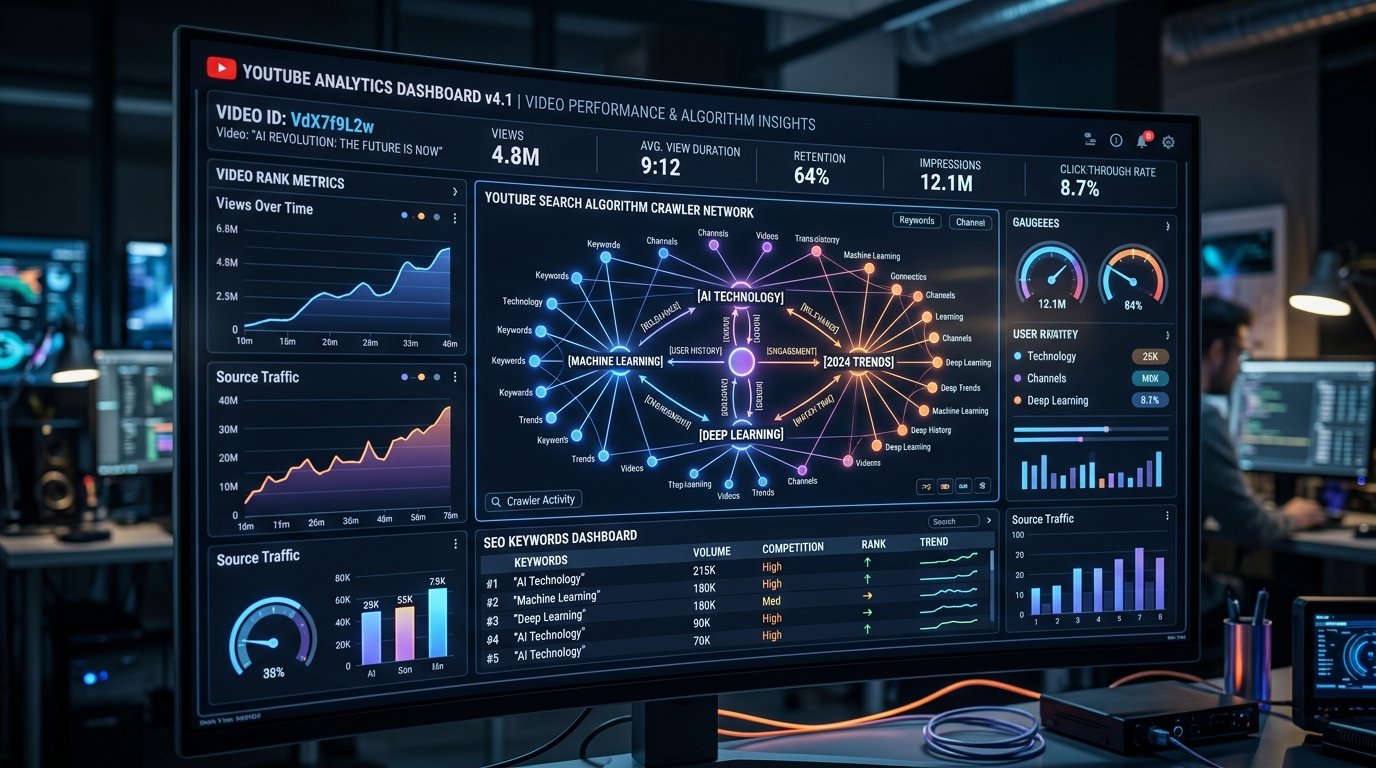
YouTube SEO Master Strategy: How Search Algorithms Rank Video Transcripts and Metadata
YouTube is the second largest search engine in the world, processing billions of queries every month. Yet many creators still rely on outdated SEO practices like keyword stuffing in tags and repeating exact-match phrases in titles. Modern recommendation systems are far more sophisticated.
In this guide, we break down how YouTube's search and discovery algorithms evaluate video content, process audio speech, index captions, and use viewer engagement metrics to decide which videos earn top placement in search results and homepage recommendations.
- --
How YouTube Parses Video Audio and Captions for Search Indexing
When you upload a video to YouTube, the platform's automated speech recognition (ASR) system processes the audio track to generate automated captions. This spoken text forms a fundamental dataset that YouTube uses to categorize your content.
### Natural Language Processing and Semantic Vectors
YouTube's recommendation systems do not simply count how many times a keyword appears. Instead, natural language processing (NLP) models convert the video's spoken text into high-dimensional semantic vectors:
- **Topic Clustering:** The algorithm identifies core concepts, entities, and related terminology mentioned throughout the video.
- **Search Intent Matching:** When a user enters a search query, the system matches the semantic intent of the query against the video's indexed transcript data.
- **Manual Subtitles vs Auto-Captions:** Uploading clean, manually verified captions (.SRT files) removes automated phonetic errors, ensuring the algorithm receives accurate semantic signals.
- --
The Dual Pillars of Video Ranking: Click-Through Rate (CTR) and Average View Duration (AVD)
While text metadata helps YouTube understand what a video is about, viewer behavior metrics determine how high and how long that video ranks.
| Metric | Primary Function | Optimization Focus |
|---|---|---|
| **Click-Through Rate (CTR)** | Measures how enticing a thumbnail and title are when displayed in search or feed results. | High-contrast visual design, clear value proposition, curiosity hooks without clickbait. |
| **Average View Duration (AVD)** | Measures how long viewers remain tuned into the video relative to its total duration. | Strong opening hook, eliminating fluff, structured pacing, clear chapter transitions. |
| **Viewer Satisfaction Signals** | Evaluates long-term viewer happiness through likes, shares, comments, and post-watch surveys. | Encouraging thoughtful discussion, answering search queries completely. |
- --
Optimizing Video Chapters for Google Search Key Moments
Google frequently displays YouTube video chapters directly on search engine results pages (SERPs) as interactive 'Key Moments'. This provides creators with massive organic exposure beyond YouTube itself.
### Best Practices for Formatting Timestamps
1. **Start at Zero:** The first timestamp must always begin at 00:00.
2. **Minimum Chapter Length:** Ensure each chapter segment is at least 10 seconds long.
3. **Include 3+ Chapters:** Provide at least three distinct timestamp markers in the video description.
4. **Use Descriptive Chapter Titles:** Name chapters after specific questions or sub-topics that users actively search for (e.g., "02:15 - Dual Base ISO Explained").
- --
Keyword Research for YouTube: Intent Matching vs Search Volume
Effective YouTube keyword research is about understanding the user's underlying intent:
- **Informational Intent:** Queries starting with "How to", "Tutorial", or "Explained". Viewers want clear, step-by-step guidance.
- **Comparative Intent:** Queries containing "vs", "Review", or "Best tools for". Viewers are evaluating options before making a decision.
- **Transactional Intent:** Queries seeking specific software, templates, or immediate utilities.
Using tools like TranscriptG to extract transcripts from top-ranking videos in your niche reveals the exact terminology and phrasing that successful creators use to answer search intent.
- --
Step-by-Step Checklist for Publishing Search-Optimized Videos
Before publishing your next video, follow this streamlined SEO checklist:
- [ ] **Accurate Transcript Upload:** Upload a verified .SRT subtitle file to ensure accurate indexing.
- [ ] **Keyword-Focused Title:** Keep the main target phrase near the beginning of the title while maintaining natural readability.
- [ ] **Detailed Video Description:** Write a 200–300 word description summarizing the core topic and incorporating related semantic entities.
- [ ] **Formatted Chapter Timestamps:** Include clear timestamps starting at 00:00 in the description box.
- [ ] **High-Contrast Custom Thumbnail:** Design a clean, legible thumbnail that complements the title without duplicating text verbatim.
- --
Frequently Asked Questions (FAQ)
Do video tags still matter for YouTube SEO?
According to YouTube's official guidelines, tags play a minimal role in video discovery. They are primarily helpful for addressing common spelling errors associated with your topic or channel name. Focus your effort on titles, descriptions, thumbnails, and clean transcripts.
How long does it take for a new video to rank in search?
Search indexing begins immediately upon upload and processing. However, the algorithm continues to adjust your ranking over 24 to 72 hours based on early viewer CTR and retention metrics.
- --
Optimize your YouTube channel's search reach today using TranscriptG's automated transcript and chapter tools!
Launch Free Tools